
Wedding Buffet vs Traditional Service: Which Is Better for Your Guests?
Planning a wedding involves hundreds of decisions, and one of the most important is choosing the right food service style. While selecting the menu is essential, deciding how the food will be served is equally important. The service style influences guest comfort, event flow, dining experience, and even your overall catering budget.
The two most popular options are wedding buffet service and traditional table service. Each has its own advantages, and the right choice depends on your guest list, venue, budget, and wedding theme.
What Is Traditional Table Service?
Traditional service involves food being served directly to guests at their tables by trained service staff.
Meals are served course by course or in a fixed sequence.
This style is commonly seen at:
- Formal weddings
- Family ceremonies
- VIP receptions
- Traditional celebrations
Table service creates a more structured and elegant dining experience.
Comparing Wedding Buffet and Traditional Service
1. Guest Experience
Buffet Service
Guests have the freedom to choose their favorite dishes and return for additional servings if they wish.
Advantages include:
- Greater menu flexibility
- Personalized dining experience
- Opportunity to try multiple dishes
- Better interaction among guests
Traditional Service
Guests remain seated while food is served.
Benefits include:
- Comfortable dining
- Personalized attention
- Organized meal service
- Suitable for elderly guests
2. Menu Variety
Buffets typically offer a much larger selection of dishes.
A buffet may include:
- Multiple starters
- Regional specialties
- Popular Indian dishes
- International-inspired cuisine
- Live counters
- Desserts
- Beverages
Traditional service generally features a fixed menu with limited choices.
If menu variety is important, buffet service offers greater flexibility.
3. Event Flow
Buffets encourage guests to move around, interact, and enjoy different food stations.
This creates a lively atmosphere during the celebration.
Traditional service follows a structured timeline and works well for formal events where speeches, performances, or ceremonies are scheduled around meal service.
4. Dining Speed
A professionally managed buffet allows multiple guests to be served simultaneously.
Multiple serving counters reduce waiting time significantly.
Traditional service depends on the efficiency of the serving staff and may take longer when serving a large number of guests.
5. Budget Considerations
Wedding buffets are generally more cost-effective for medium and large gatherings because they require fewer serving staff and allow efficient service management.
Traditional table service often involves:
- More service staff
- Additional table setup
- Longer serving time
- Higher operational costs
Your final budget will depend on guest count, menu selection, and event requirements.
6. Food Presentation
Both service styles can look elegant when planned professionally.
Buffet Presentation
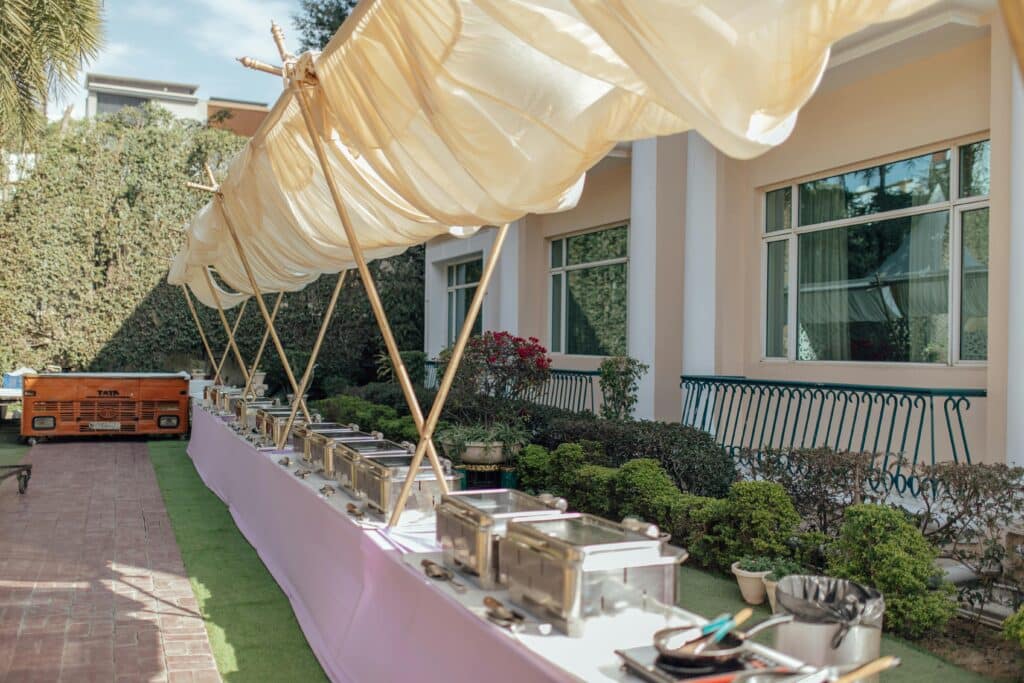
Modern buffet counters often feature:
- Decorative food displays
- Premium serving equipment
- Floral arrangements
- Creative lighting
- Themed food stations
Traditional Presentation
Food is presented individually at each table, creating a refined and luxurious dining experience.
7. Guest Convenience
Buffets allow guests to:
- Choose portion sizes
- Skip dishes they don’t prefer
- Return for additional servings
- Eat at their own pace
Traditional service offers convenience for elderly guests, children, and those who prefer not to stand in buffet lines.
8. Best Choice for Large Weddings
For weddings with several hundred guests, buffet service is usually the preferred option.
Benefits include:
- Faster guest movement
- Better crowd management
- Larger menu options
- Efficient service
- Improved guest satisfaction
Professional catering teams strategically arrange buffet stations to minimize queues and ensure a smooth dining experience.
9. When Traditional Service Works Best
Traditional service is ideal for:
- Intimate weddings
- VIP receptions
- Formal celebrations
- Family ceremonies
- Luxury dining experiences
Smaller guest lists make table service more practical and enjoyable.
Can You Combine Both?
Absolutely.
Many modern weddings successfully combine buffet and traditional service.
For example:
- Welcome drinks served at tables
- Starters served by staff
- Main course arranged as a buffet
- Desserts presented at live counters
This hybrid approach offers the best of both worlds by combining elegance with flexibility.
Tips for Choosing the Right Catering Style
Before making your decision, consider:
Guest Count
Larger weddings generally benefit from buffet service.
Venue Layout
Ensure adequate space for buffet counters and guest movement.
Budget
Compare staffing requirements and overall catering costs.
Wedding Theme
Luxury weddings may complement table service, while contemporary celebrations often suit buffet arrangements.
Guest Preferences
Think about the age groups and comfort of your guests.
Why Professional Catering Makes the Difference
Regardless of the service style you choose, the quality of catering determines your guests’ overall experience.
An experienced catering company ensures:
- Fresh and delicious food
- Attractive presentation
- Efficient service
- Hygienic food preparation
- Well-trained staff
- Timely buffet replenishment
- Smooth event coordination
Professional planning helps your celebration run seamlessly from start to finish.
Frequently Asked Questions
Which is more suitable for large weddings?
Buffet service is generally the preferred choice for large weddings because it accommodates many guests efficiently while offering a wider variety of food options.
Is buffet catering more affordable than traditional service?
In many cases, buffet catering is more cost-effective due to reduced staffing requirements and streamlined service.
Can I include live food stations with a buffet?
Yes. Live food stations are one of the biggest advantages of buffet catering and add an interactive element to the dining experience.
Which option provides more menu variety?
Buffet service offers greater flexibility, allowing guests to choose from multiple dishes and customize their meal.
Can I combine buffet and table service?
Yes. Many couples choose a hybrid approach where selected courses are served at the table while the main meal is offered through a buffet.